
Bengaluru, August 3, 2025:
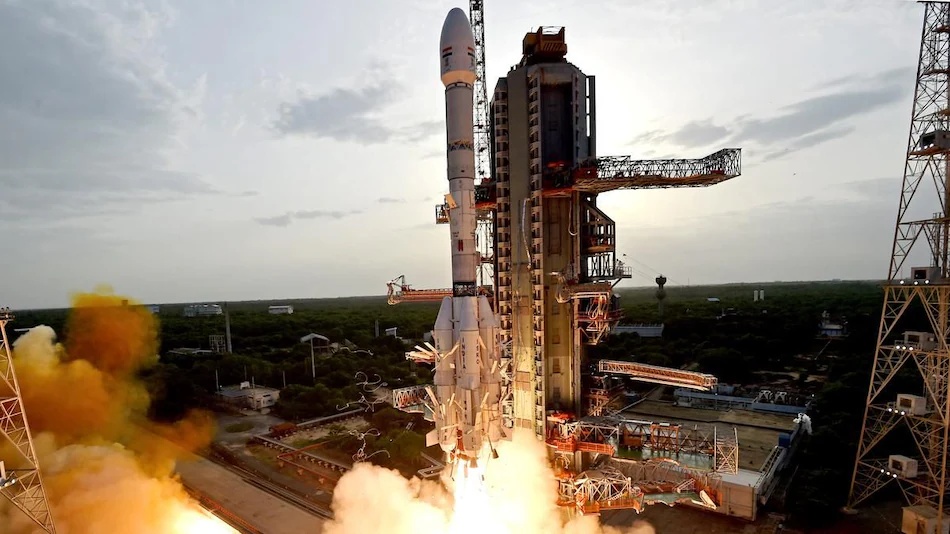
In a landmark achievement for India’s space and scientific community, the joint NASA-ISRO NISAR satellite was successfully launched this week, marking a significant step forward in earth observation technology. This mission is set to revolutionize how the world monitors climate change, natural disasters, and environmental shifts.
The NASA-ISRO Synthetic Aperture Radar (NISAR) satellite is the first radar imaging satellite capable of providing highly detailed, all-weather, day-and-night data on Earth’s surface. Unlike optical satellites, NISAR’s radar can penetrate clouds and operate regardless of lighting, allowing continuous monitoring of natural phenomena such as floods, earthquakes, and deforestation.
This collaboration between India’s Space Research Organisation (ISRO) and the US National Aeronautics and Space Administration (NASA) demonstrates the growing scientific partnership between the two countries. The satellite carries dual-frequency SAR (L-band and S-band), giving it the unique capability to capture data for both large-scale and localized events with unprecedented accuracy.
Experts opinion on NISAR satellite
Experts highlight the importance of NISAR’s data in addressing some of the biggest environmental challenges of our time. Climate scientists will use the satellite’s information to track glacial movements, monitor agricultural cycles, and assess damage from natural disasters. This will help governments and relief agencies plan faster and more effective responses.
“With NISAR satellite, India steps into a new era of space technology,” said Dr. Anjali Sharma, senior scientist at ISRO’s Earth Observation Centre. “This mission will empower us to better understand environmental changes and protect communities vulnerable to disaster.”
The launch also strengthens India’s position as a key player in the global space race, showcasing its ability to support cutting-edge scientific missions. Governments, researchers, and industries worldwide are expected to benefit from the insights provided by NISAR.
Looking ahead, this mission is expected to foster further Indo-US cooperation in space technology and inspire more collaborative projects addressing global challenges.
What This Means for India and the World
- Continuous, real-time earth observation capabilities.
- Enhanced disaster prediction and environmental monitoring.
- Critical data supporting climate change mitigation efforts.
- Boost to India’s space science prestige and technology exports.
For space enthusiasts and citizens alike, the NISAR satellite launch is a proud moment for India’s scientific progress and a welcome advancement toward sustainable environmental stewardship.
Follow All India Insights for breaking updates on this evolving Southeast Asia crisis. We’ll keep you posted with verified reports, background context, and diplomatic developments. Others on this like gadgets360.